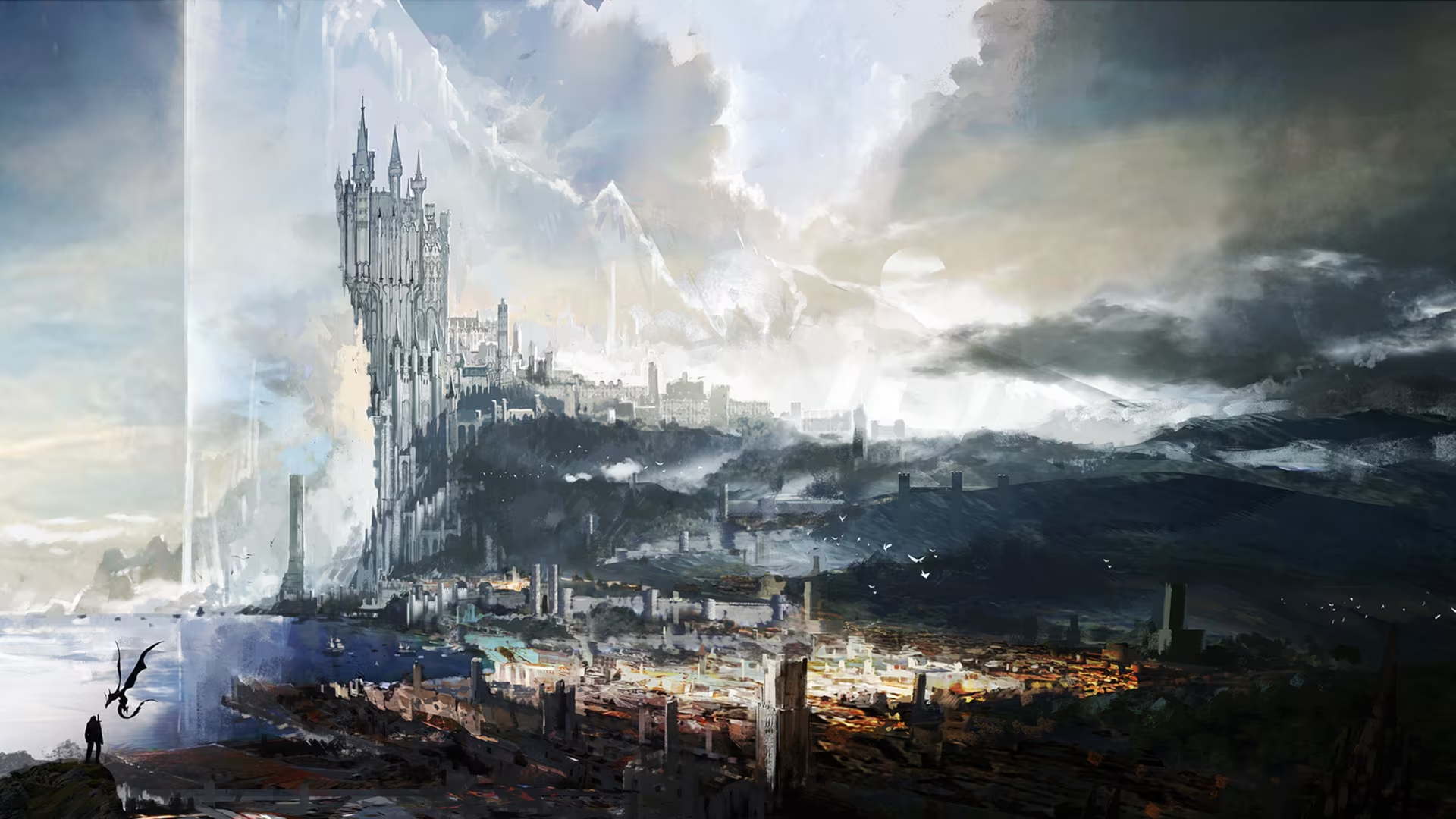
Aetherfloods
The world is replete with aether—it flows through all things living and dead. Many harness it to wield magic. In some places, however, there is too much aether. Like air overburdened with water releases droplets of rain, aether will become manifest, forming into crystals and volatile magicks. Such places—aetherfloods—are terribly dangerous to living creatures, yet sometimes rife with opportunity.
Taxonomy
Aetherfloods are regions overflowing with aether. Streaks of blue light, pure aether, form and dissipate in the air. In longer-lasting floods, crystals may start to form on solid surfaces. Most floods are small, covering less than a square mile. Such aetherfloods can form naturally by a temporary imbalance in an area’s aether, and rarely last longer than a week.
Formation
After great magical cataclysms, like the clash of Prime eikons, or the great rites of archmages, even larger aetherfloods may form. These can last months or even years. Mighty magick depletes the region of a great amount of aether, and the resulting aetheric imbalance can wreak havoc on the area. It is said that in the War of the Magi, long long ago, spells so potent were wielded that nigh all of the land was covered in aetherfloods for a dozen years.
Finally, natural flows of aether can sometimes simply align such that an area is covered in what is essentially a permanent aetherflood. This rarely happens on the surface; most such places are deep underground. Many such places become the site of crystal mines, but many further still are simply too dangerous to even enter. Those few permanent floods that occur on the surface are often rife with bizarre and deadly creatures, adapted and mutated by the aetheric overflow.
Imbalance
Scholars agree that there are two different types of aetherflood: those resulting from an overflow of aether in general; and those resulting from great imbalances between the elements. The latter type is much rarer than the first, and so the word aetherflood refers mainly to the first. Floods were one or more elements reign supreme are named after those elements: a fire flood is overfull of fire aether, and flames can erupt from nowhere. A flood of darkness, meanwhile, is a dark and gloomy place, where corpses may rise from the earth as undead.
Hazards and Treasures
Aetherfloods are some of the most dangerous places imaginable. Aether may spontaneously erupt into spells, especially when provoked, and the overabundance of energy can corrupt and transform living things.
- Wild Magic.
- Aetherfloods are places where magic runs wild. Elemental phenomenon, and even entire spells, may erupt at random, and while the abundance of aether can strengthen spells cast within a flood, it also makes magicks difficult to control. Some magicians seek out aetherfloods to draw upon their strength for powerful rituals—very few return unscathed.
- Akashic Corruption.
- Most living creatures cannot handle the overwhelming amounts of aether that floods subject their bodies to. Over time, the aether warps them, filling them with unnatural strength. Their minds tear asunder under the pressure, and they become little more than mindless beasts, attacking any who are not also Akashic.
- Crystals.
- In longer-lasting floods, aether begins to crystallise. It takes weeks for even a small crystal to grow, and useful crystals take months if not years to form. Crystals are highly valued, for their stored aether can be used to cast magicks and craft magical items.
- Dominants and Sorcerers.
- Having a naturally high aetheric density, Sorcerers are resistant, and Dominants all but immune, to the corrupting effects of aetherfloods.
Rules
These are the gameplay effects of aetherfloods.
Types
Aetherfloods fall into three categories of potency, called the flood’s severity:
- Minor aetherfloods are the most common sort. They are rarely dangerous unless one stays for an entire day.
- Major floods are uncommon. They pose a danger to any who stays within for an hour.
- Severe floods are rarer still. Merely entering one is to risk death for most.
Aside from severity, floods can also have one or more elemental aspects. Unaspected floods are the most common type. Aetherfloods of opposing elements (ice & fire, for example) are extremely rare, and tend to be far more chaotic than most floods—which are already chaotic places to begin with.
Recognition
Aetherfloods are rarely subtle. Unless a flood is Minor, it is generally obvious that an area is flooded. Minor floods may, at the DM’s discretion, require a DC 15 Wisdom (Perception) check to recognize. Sorcerers and Dominants make such rolls with advantage.
A character who wishes to know more must make an Intelligence (Arcana) check. The result dictates their knowledge, according to the table below.
| Result | Knowledge |
|---|---|
| 5+ | Aetherfloods are very dangerous places. You recognize if a flood has an elemental aspect. |
| 10+ | The volatile aether of a flood means using magic is dangerous there. Living creatures that stay too long become Akashic. |
| 15+ | A flood’s wild magic can sometimes boost spells too. Sorcerers and Dominants are resistant to becoming Akashic. If considering a particular type of flood (e.g. fire), you know the general effects of its particular phenomena. (Fires may erupt spontaneously, for example.) |
| 20+ | You recognize how the flood you’re investigating is likely to have formed, as well as when (and if) it will go away. |
| 30+ | You wrote this page. |
Spontaneous Magic
Spells and elemental effects can spontaneously erupt within aetherfloods. This happens more often, and with more strength, in floods of higher severity. These effects can be divided into environmental and active effects. All aetherfloods have the Wild Magic trait. Examples of additional effects for different types of floods are listed below.
Aspected floods affect spells of their elements, and spells of the opposing element, in an additional manner. Spells of the same element are strengthened: for any Wild Magic table roll (see below) that isn’t a 1 or 2, increase it by 1d4, maximum 20. Spells of the opposing element are weakened: for any Wild Magic table roll (see below) that isn’t a 20, reduce it by 1d4, minimum 1.
- Environmental Effect: Wild Magic.
- Whenever a creature casts a spell within an aetherflood, it must make an ability check using its spellcasting ability modifier, plus its proficiency bonus. Intelligent creatures can choose to fail this check (though doing so is rarely wise). The DC is noted below. Sorcerers and Dominants make this check with advantage. On a failed check, roll on the appropriate Aetherflood Wild Magic table for the flood’s severity; the listed phenomenon occurs. If a phenomenon cannot be reasonably applied to the spell, reroll.
| Severity | Base DC |
|---|---|
| Minor | 10 |
| Major | 15 |
| Severe | 20 |
Wild Magic DC = Severity-based DC + the spell's level + number of spells cast by same creature in the last hour.
Minor Aetherflood Wild Magic table
| Number (d20) | Wild Magic Phenomenon |
|---|---|
| 1 | The spell additionally consumes a spell slot of the same level or higher, or two of the level below it. If you cannot pay, lose 1d12 hit points per level of the slot and suffer one level of Corruption. Cantrips count as 1st-level. |
| 2 | The spell affects someone other than the intended target. Randomly re-select each target to another creature within 60 feet. (Even if the spell is self-only, etc. Retarget the area itself for area spells.) |
| 3-5 | The spell fails. The spell slot is lost. |
| 6-10 | The spell fails. The spell slot is not expended, but you cannot use magic of any form until the beginning of your next turn. |
| 11-15 | The spell works normally, but a Minor elemental phenomenon occurs near the caster. |
| 16-17 | The spell is heightened. Increase its effective spell level by 1. |
| 18-19 | The spell is empowered. If the spell deals damage, apply the Empowered Spell metamagic to it. Otherwise, apply the Heightened Spell metamagic to it. |
| 20 | Roll on the Major wild magic table instead. |
Major Aetherflood Wild Magic table
| Number (d20) | Wild Magic Phenomenon |
|---|---|
| 1 | Same as [1] on the Minor table, and a Minor elemental phenomenon occurs near the caster, and the cost is deducted as though the spell were one level higher. |
| 2 | Same as [2] on the Minor table, and a Minor elemental phenomenon occurs near the caster. |
| 3-5 | As [3-5] on the Minor table, and a Minor elemental phenomenon occurs near the caster. |
| 6-10 | As [6-10] on the Minor table, and a Minor elemental phenomenon occurs near the caster. |
| 11-15 | The spell works normally, but a Major elemental phenomenon occurs near the caster. |
| 16 | The spell works normally, but does not consume the spell slot or any consumed material components. |
| 17 | As [18-19] on the Minor table, but the spell slot is not consumed. |
| 18 | The spell is intensified. If the spell deals damage, increase its damage by 50%. Otherwise, increase the saving throw DCs of the spell by 2. |
| 19 | The spell is emboldened. Increase its effective spell level by 3. |
| 20 | Roll on the Severe wild magic table instead. |
Severe Aetherflood Wild Magic table
| Number (d20) | Wild Magic Phenomenon |
|---|---|
| 1 | Same as [1] on the Minor table, and a Major elemental phenomenon occurs near the caster, and the cost is deducted as though the spell were three levels higher. |
| 2 | Same as [2] on the Minor table, and a Major elemental phenomenon occurs near the caster. |
| 3-5 | Same as [3-5] on the Minor table, and a Major elemental phenomenon occurs near the caster. |
| 6-10 | As [6-10] on the Minor table, and a Major elemental phenomenon occurs near the caster. |
| 11-15 | The spell works normally, but a Severe elemental phenomenon occurs near the caster. |
| 16 | The spell is accelerated. You may cast an additional spell this turn, as a free action. |
| 17 | The spell is maximized. If the spell deals damage, take the maximum possible value instead of rolling dice. Otherwise, all saving throws against the spell are made with disadvantage, and the DC is increased by 2. |
| 18 | The spell is twinned. The spell is cast twice; you concentrate on both instances as though they were a single spell. |
| 19 | The spell is intensified, as [18] on the Major table, and it doesn’t consume a spell slot. |
| 20 | Roll twice on this table; apply both results. If a spell would fail and succeed simultaneously, it still fails. If you reroll into this entry, reroll again, and a Severe magical phenomenon occurs near the caster. |
Unaspected Floods
- Environmental Effect: Unpredictable Aether.
- Unaspected floods are less predictable than other floods. All Wild Magic DCs are increased by 3.
- Elemental Phenomena.
- Unaspected phenomena are either eruptions of other random elements, or show off the chaotic nature of the aether in the area. Examples phenomena are listed in the table below. Alternatively, select two elements by rolling two d10. Pick a phenomenon from one of the rolled elements. If both dice show the same number, increase the phenomenon’s severity one step.
| Severity | Example Phenomena |
|---|---|
| Minor | Chaos bolt, enlarge/reduce |
| Major | Hallucinatory terrain, conjure elemental, pulse wave |
| Severe | Prismatic spray, reverse gravity, prismatic wall, antimagic field (1d4 turns) |
| Number | Element | Number | Element |
|---|---|---|---|
| 1 | Dark | 6 | Earth |
| 2 | Light | 7 | Wind |
| 3 | Life | 8 | Water |
| 4 | Death | 9 | Ice |
| 5 | Fire | 10 | Lightning |
Dark Floods
- Environmental Effect: Blackest Night.
- Floods of darkness are gloomy places devoid of light. Light sources provide half their normal illumination, sunlight is dim rather than bright light, and all creatures have resistance to radiant damage. Creatures weak to radiant damage become neither resistant nor weak instead. Corpses within the flood are reanimated into undead after a few days (minor), hours (major), or minutes (severe) of exposure.
- Elemental Phenomena.
- Dark phenomena inflict madness, pain, or confusion upon its victims, create undead, or unleash shadows and darkness. See the following table for examples.
| Severity | Example Phenomena |
|---|---|
| Minor | arms of Hadar, dissonant whispers, darkness, Tasha’s mind whip, vortex warp |
| Major | Animate dead, confusion, hunger of Hadar, summon shadowspawn, phantasmal killer |
| Severe | power word pain, mental prison, maddening darkness, feeblemind, psychic scream |
Light Floods
- Environmental Effect: Shining Bright.
- Light floods are places where even candles can blind. Light sources provide double their normal illumination. Any creature standing in direct sunlight takes 2d8 radiant damage every hour (minor), minute (major), or turn (severe). Undead have disadvantage on attack rolls, saving throws, and ability checks, and always suffer the damage every turn.
- Elemental Phenomena.
- Light phenomena tend to take the form of burning and blinding light, or magical force. Rarely, they form protective spells instead. See the following table for examples.
| Severity | Example Phenomena |
|---|---|
| Minor | Dancing lights, sacred flame, guiding bolt, shield of faith, moonbeam |
| Major | Blinding smite, spirit guardians, Otiluke’s resilient sphere, destructive wave (radiant), wall of force |
| Severe | Sunbeam, divine word, forcecage, sunburst, holy aura, invulnerability |
Life Floods
- Environmental Effect: Great Vigour.
- Life floods overflow with life. Plants and animals grow quickly, and larger than usual. This often results in much of the flood being difficult terrain due to being covered in roots and vines.
Death Floods
- Environmental Effect: Salted Earth.
- Whereas Dark floods are gloomy and unnerving places, where nature takes on a corrupt appearance, Death floods are instead grey and desolate, often devoid of life at all. Living non-Akashic creatures take 1d10 necrotic damage for every hour (minor), minute (major), or turn (severe) they spend inside. Undead creatures take 1d10 necrotic damage every turn, and become vulnerable to necrotic damage, as the energies of true Death suffuse them.
- Elemental Phenomena.
- Death phenomena usually take the form of Deathly energy that decays or curses the living and undead. See the following table for examples. Any Death phenomenon that deals necrotic damage can damage undead creatures even if the spell says otherwise.
| Severity | Example Phenomena |
|---|---|
| Minor | Toll the dead, inflict wounds, bane, ray of enfeeblement, blindness/deafness |
| Major | Bestow curse, slow, blight, destructive wave (necrotic), enervation |
| Severe | Circle of death, harm, finger of death (becomes Akashic rather than Undead), power word kill |
Fire Floods
- Environmental Effect: Hellish Heat.
- Fire floods are, as might be expected, quite warm. They are considered areas of Extreme Heat, though large floods may contain small pockets that are cooler. Creatures who would die due to exhaustion from the heat become Akashic instead. Additionally, flammable materials may spontaneously catch fire.
- Elemental Phenomena.
- Fire phenomena tend to be spectacular, but simple: boom kablooey, and then with the burning and whatnot. See the table below for examples.
| Severity | Example Phenomena |
|---|---|
| Minor | Create bonfire, burning hands, flaming sphere, pyrotechnics, heat metal |
| Major | Fireball, summon elemental (fire), wall of fire, immolation, flame strike |
| Severe | delayed blast fireball, fire storm, incendiary cloud, meteor swarm |
Earth Floods
- Environmental Effect: Rocky Foundations.
- Earth floods tend to be tumultuous affairs. The earth grinds, quivers, and erupts. The ground is uneven,rocks may shift. Almost all ground is difficult terrain, and minor quakes and shifts are common, requiring Dexterity (Acrobatics) checks to avoid falling prone. Prone creatures risk being encased in stone, as well, should a quake happen where they lie.
- Elemental Phenomena.
- Earth phenomena are usually eruptions of earth, stone, and sand. See the table below for examples.
| Severity | Example Phenomena |
|---|---|
| Minor | Mold earth, earth tremor, dust devil, Maximilian’s earthen grasp, spike growth |
| Major | Erupting earth, wall of sand, summon elemental (earth), transmute rock, wall of stone |
| Severe | Bones of the earth, flesh to stone, move earth, earthquake, meteor swarm |
Wind Floods
- Environmental Effect: Howling Gales.
- Wind floods are filled with constant stormy winds. If the flood is Minor, the strong wind imposes several effects (DMG, p. 110). If the flood is Major, the wind is stronger. In addition to the Minor effects, a constant control winds (Gusts, strong) covers the area. The direction of the wind shifts every 1d4 turns. If the flood is Severe, in addition to the previous effects, all creatures are deafened, and the area is difficult terrain.
- Elemental Phenomena.
- Wind phenomena take the form of slicing gusts, and shifting gales. See the table below for examples.
| Severity | Example Phenomena |
|---|---|
| Minor | Gust, catapult (debris tossed by the wind), thunderwave, dust devil, gust of wind, warding wind |
| Major | Summon elemental (air), wind wall, storm sphere, control winds, telekinesis (carried away by wind) |
| Severe | Whirlwind |
Water Floods
- Environmental: Torrential Rain.
- It almost always rains in Water-aspected aetherfloods, ranging from a mild drizzle (Minor) to constant rainstorms (Severe). The terrain is usually flooded with water, causing difficult terrain and making ponds out of larger holes. In Major and Severe floods, heavy rain causes the area to be lightly obscured, and imposes disadvantage on Wisdom (Perception) checks that rely on sight. In Severe floods, the rain extinguishes open flames and imposes disadvantage on Wisdom (Perception) checks that rely on hearing.
- Elemental Phenomena.
- Water phenomena are straight-forward, most of the time: water. See the table below for examples.
| Severity | Example Phenomena |
|---|---|
| Minor | Shape water, create water, Maximilian’s earthen grasp (made of water), |
| Major | Maelstrom, control water |
| Severe |